“Let the moon man know what it is to live on earth.”
Karel Zeman’s 1962 surrealist new wave Czech adventure The Fabulous Baron Munchausen is a special film which wholeheartedly merits the title of gem. Inspired by the literary tales of Baron Munchausen, the film combines live-action performances with various forms of animation, including painted backgrounds, miniature sets and puppetry. Illustrations were partly inspired by Gustave Doré and other nineteenth-century artists, but the blend of media still feels unique today.
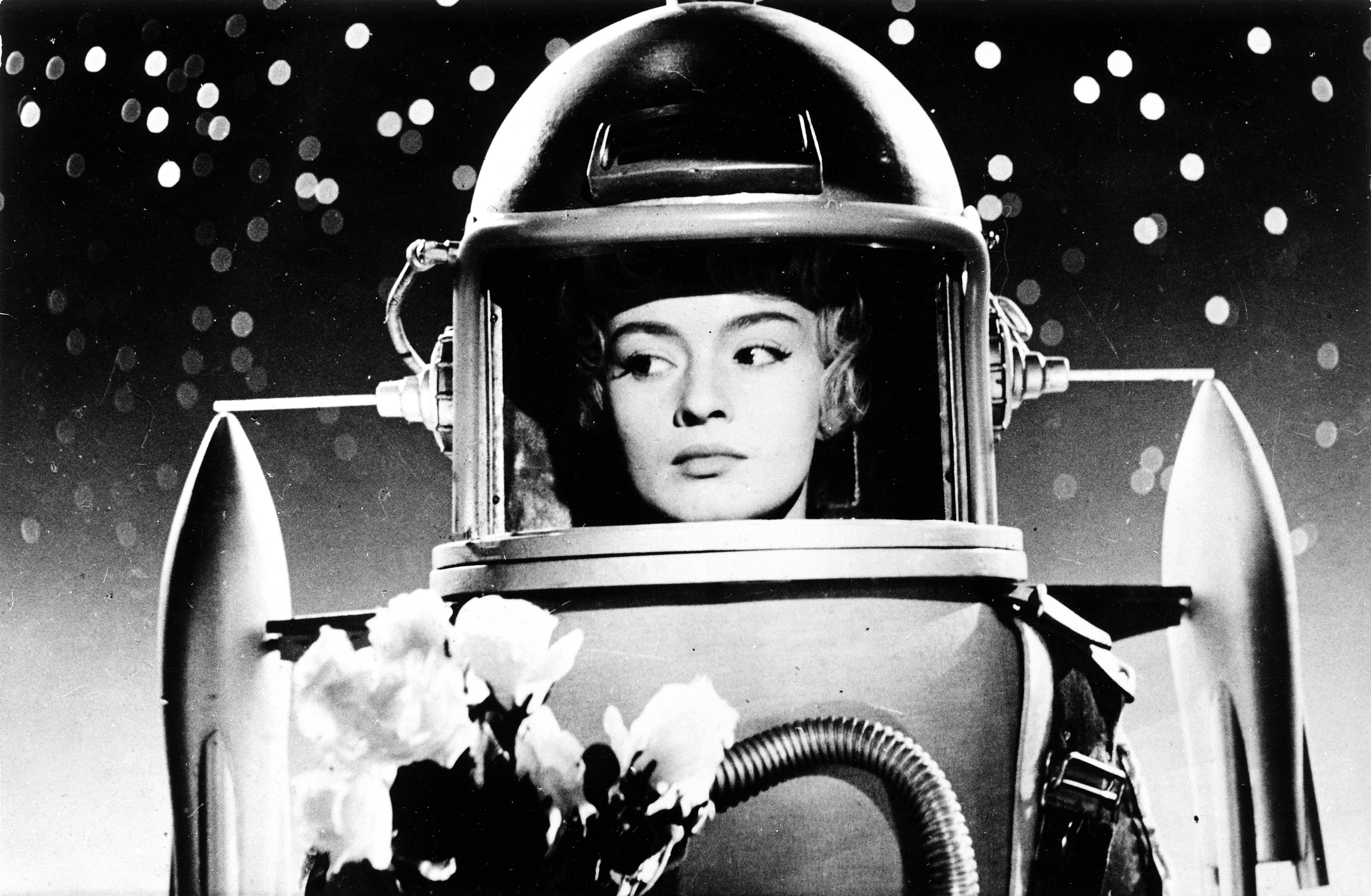
Within the narrative, storytelling itself is a theme. The Fabulous Baron Munchausen recounts impossible adventures that we bear witness to travelling to the moon, escaping sea monsters, riding cannonballs, and defying logic as and when suited. The fantastic is navigated with confidence and sincerity, and characters behave as though the extraordinary is ordinary. Curiosity and courage become a way of understanding the world around us, much like a child learns, and emotional experience takes precedence over logic. Throughout, there is an implicit suggestion that the telling of stories itself possesses a magical value, as it inspires such wonder. The film sets up an opposition between imagination and rationality, art and science, in the form of the Baron and the modern astronaut, Tonik. Tonik initially represents a kind of enlightenment thinking favouring science and technological progress, whilst the Baron champions romanticism. The latter is the Dionysus to the former’s Apollo. Predominating the narrative is the motif of the moon, an infamous symbol for intuition, emotion, romance, and dreaming, all of which set the tone.
The Baron is our narrator, and he is disgruntled by Tonik’s place in the affections of the beautiful princess Bianca, whom the pair rescue from a Sultan. Despite the Baron serving as protagonist, notable sympathies lie with Bianca and Tonik as the lovers, drawn to each other authentically, held against the Baron’s flamboyant, unsuccessful attempts at chivalry. While romance and art are clearly favoured, science is integrated rather than abandoned. As the plot progresses, the opposition between the men and their ideals softens, ending in Tonik being referred to as a ‘dangerous fantasist’ and making a romantic gesture of astronomical proportions. Furthermore, it is their combined efforts which result in the final act of fantasy, a castle launched to the moon. This kind of storybook logic is one of the film’s distinguishing charms: if escaping the castle seems impossible, simply launch it into space. Engineered by Tonik and ignited by the Baron’s cavalier throw of a lit candle, imagination and technology creatively coexist and ultimately prevail. Progress is enriched, rather than diminished by either. Fantasy and science are presented as complementary ways of exploring the unknown. When Baron Munchausen first communicates with the Sultan, he debuts a new dialect which consists of instrumental sounds rather than words, comparable to a bassoon; he speaks the language of music. Though not necessarily a direct influence, parallels can be drawn with Disney’s 1935 short animation Music Land, in which musical instruments are anthropomorphised, and love letters are written as sheet music. Similarly, the whimsical short charts an opposition of rationality versus feeling, in the form of classical music versus jazz. Each has their own islands and battle sequences, but again there is a conclusion of harmony.
The Fabulous Baron Munchausen was highly influential, attested by filmmakers by way of Terry Gilliam and Tim Burton. Even to a modern audience, Zeman’s physical effects are striking. The animation has a charming, painterly beauty which at times echoes a dreamlike trance, and may inspire questions about the predominance of computer-generated effects in films today. This 1962 classic is an important reminder that technological advancement is no match for artistic vision when it comes to capturing imagination. The film’s approach to reality is certainly a creative one. The Baron, Tonik and Princess Bianca encounter spectacular creatures and challenges, but morale never drops and a light-hearted atmosphere is maintained, often via humour. Uncertainty is embraced with optimism, danger is approached with excitement and discovery rather than fear or tension. Resourcefulness becomes an important attribute for the protagonists, and the power of invention is emphasised. The Baron defeats the Sultan’s fleet by instructing the crew to smoke tobacco until they are shrouded in smoke. Tonik attempts to power a wrecked ship by steam. Creative thinking seems to render limitations obsolete, and this notion is reflected in the animation style itself.
The artistic process behind the film was immensely intricate, requiring great innovation, skill and attention to detail, yet on screen it comes together playfully and with ease. Reminiscent of the tactile, instantaneous medium of collage, grand imaginative landscapes are realized, evoking the sense that anything envisioned is possible; reality can literally be created. In the final sequence, the castle owner asserts that ‘the well is full of gun powder; all it would take is one spark’. A well suggestively represents potential, waiting to be tapped into with an action. The film warmly encourages its audience to embrace possibility and suspend disbelief. Similarly, the Baron and Tonik make their initial descent to earth on a boat led by winged horses, and Tonik’s space suit is symbolically thrown overboard. The film never aims for realism, nor should it. As critic Michael Sragow notes, ‘verisimilitude is beside the point’. The Fabulous Baron Munchausen champions the notion that the only limits are the ones we impose on ourselves.
Ultimately, the film speaks to the beauty of the desire to go beyond. It is a love letter to the stargazer and the daydreamer. Characters journey beyond the sky, beneath the sea, and across the globe. The underlying message is an affirming one: it is our existential imperative to explore the limits of our reality. Dreaming is essential if we are to expand our experience of life. While the film speaks to a certain childhood wonder in the art of storytelling, it continues to inspire and entertain audiences of all backgrounds. The heart-fuelled machine that is The Fabulous Baron Munchausen takes you on a cinematic journey that will not be forgotten.